
May is Mental Health Awareness Month. Aging and disabled individuals regularly struggle with their mental health in nursing homes. Family members and caregivers can identify signs of mental health problems early on, intervene, and help loved ones get the support and assistance they need.
The most commonly cited mental health issues in long-term care residents
At least 60% of US nursing home residents have one or more mental health disorders, the most common of which are dementia, serious mental illness (schizophrenia, other psychoses, and bipolar disorder), depressive disorders, anxiety disorders, including PTSD, and substance use disorders. 1
- Depression
- Anxiety
- Dementia
- Schizophrenia
- Bipoloar Disorder
- Alzheimer’s Disease
- Post Traumatic Stress Disorder
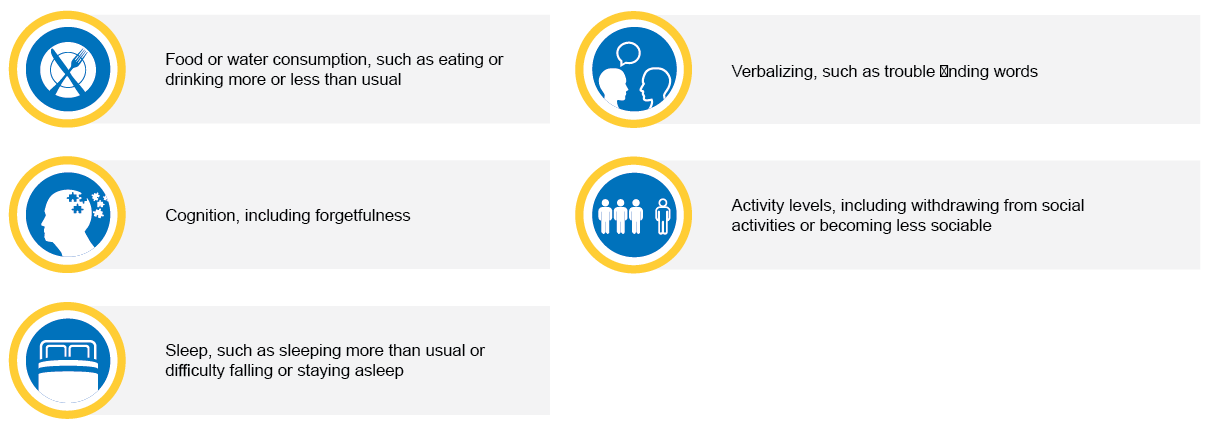
This mental health crisis has been escalated by social isolation and loneliness experienced during COVID-19. Nursing home leaders and staff can recognize signs of depression and anxiety and engage with residents to reduce isolation. 2
Online resources offer incredible support and guidance as you work to get your family member the help they need.
Visit these organizations to learn helpful information and strategies for dealing with nursing home mental health issues.
- American Psychological Association
- Anxiety and Depression Association of America
- National Alliance on Mental Illness
- Mental Health America
- Depression and Bipolar Support Alliance
- Alzheimer’s Association
If you suspect that a nursing home resident is struggling with a mental health issue, it is important to take prompt action. Bring your concerns to the resident’s caretakers. Talk to the aides and assistants who spend time with them on a day-to-day basis. Aides who are aware of potential issues can bring in specialists and escalate the matter to nursing facility physicians and nurses.
For more Mental Health Awareness Month information including how to talk to loved ones about your mental health, visit https://www.samhsa.gov/families.
#restorethegood